
Some of the public banks showed improvement; much more still needs to be done

Ashish Chauhan, MD & CEO of BSE, says it is prudent for investors to deal with more than one exchange as a risk management strategy.

India, best-performing among emerging markets in the first four months of 2017, has since ceded this position to South Korea.

Historically, it is only the third time funds raised through IPOs has crossed the Rs 10k-crore mark

Jonathan Garner, chief Asia and emerging markets equity strategist, Morgan Stanley, gives Samie Modak his assessment of the Indian economy after 3 years of Modi Sarkar.

Anil Ambani's Reliance Power tops the table with 3.46 million shareholders

The regulations will only apply to the share purchases that have been done after October 1, 2004

Lines up seven OFS issues along with half a dozen IPOs for the next few months

'Genuine' share transfer gets relief; CBDT lists three scenarios where tax would be levied

During the current financial year, 25 companies have raised Rs 28,220 crore through IPOs

Reit as an investment vehicle has a huge opportunity as the country has a rent-yielding office inventory of 537 million square feet valued in excess of $70 billion.

What was the fraud? Why did Sebi drag its feet on the order? What options does RIL have now? Samie Modak explains these and more.

A total of 25 companies raised Rs 28,220 crore during the financial year.

With a new higher tax regime coming into effect from the new financial year, top corporates and wealthy investors are in a rush to restructure their shareholding.
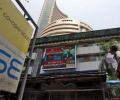
Rules for market infrastructure institutions such as stock exchanges, clearing corporations, and depositories have come under review by Sebi after five years.

Retention of Murthy within the promoter group was crucial for Infosys as the company believed the promoters' relationship would help the company in difficult times.

The total value of holdings of domestic institutional investors as a percentage of the value of FII holdings has reached its highest level in four years.

Flow surge in equity schemes is an important reason why Indian stock market did not crash.

Equity fund managers say large-caps offer higher relative safety, especially in such times.

Strong MF investments, stemming of FII outflows and positive earnings in Q3 have helped market, say analysts.
